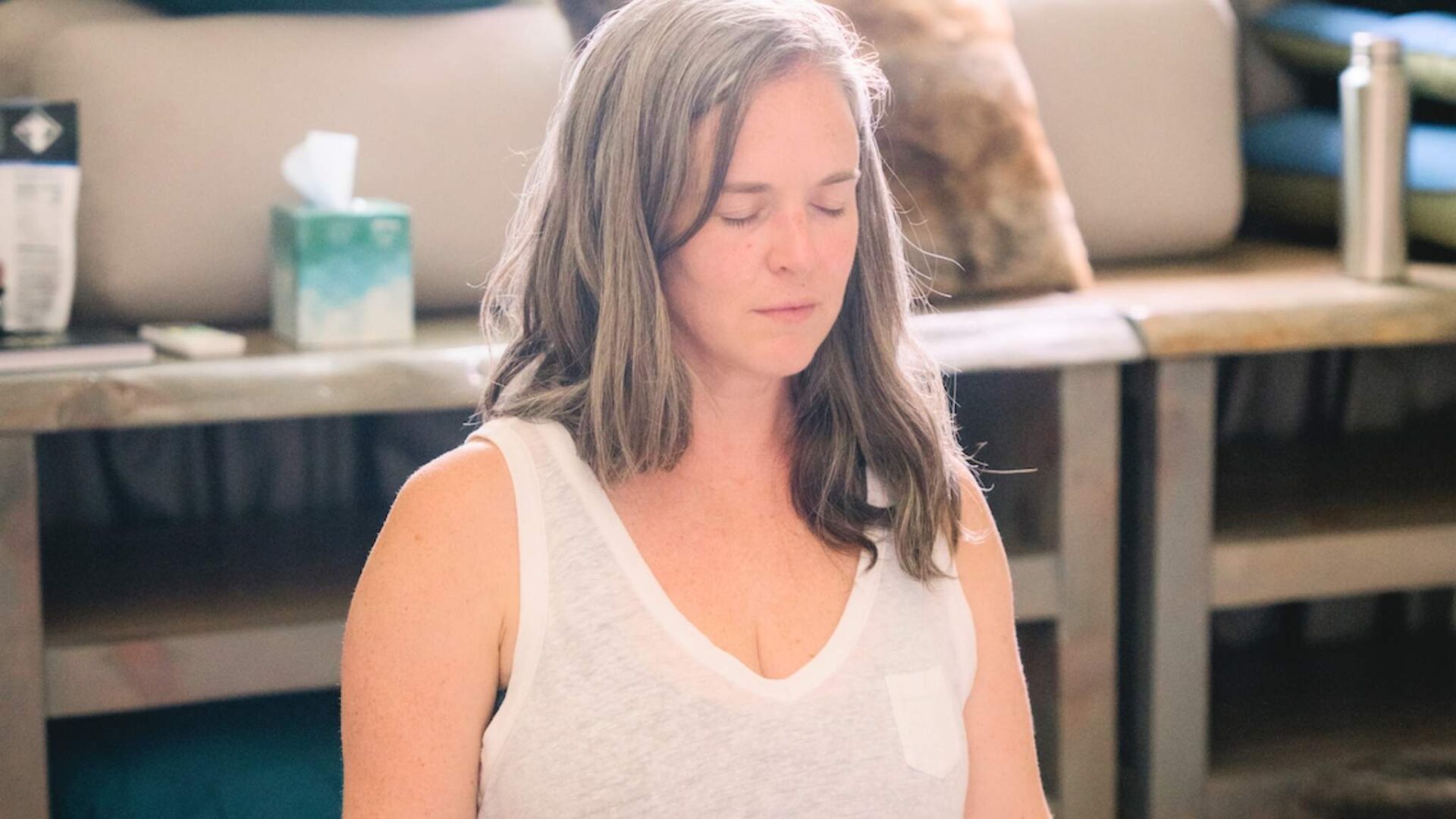
Why I Moved My Yoga Mat to the Back of the Room (And What I Found There)
13 years · 40+ retreats · 700+ women



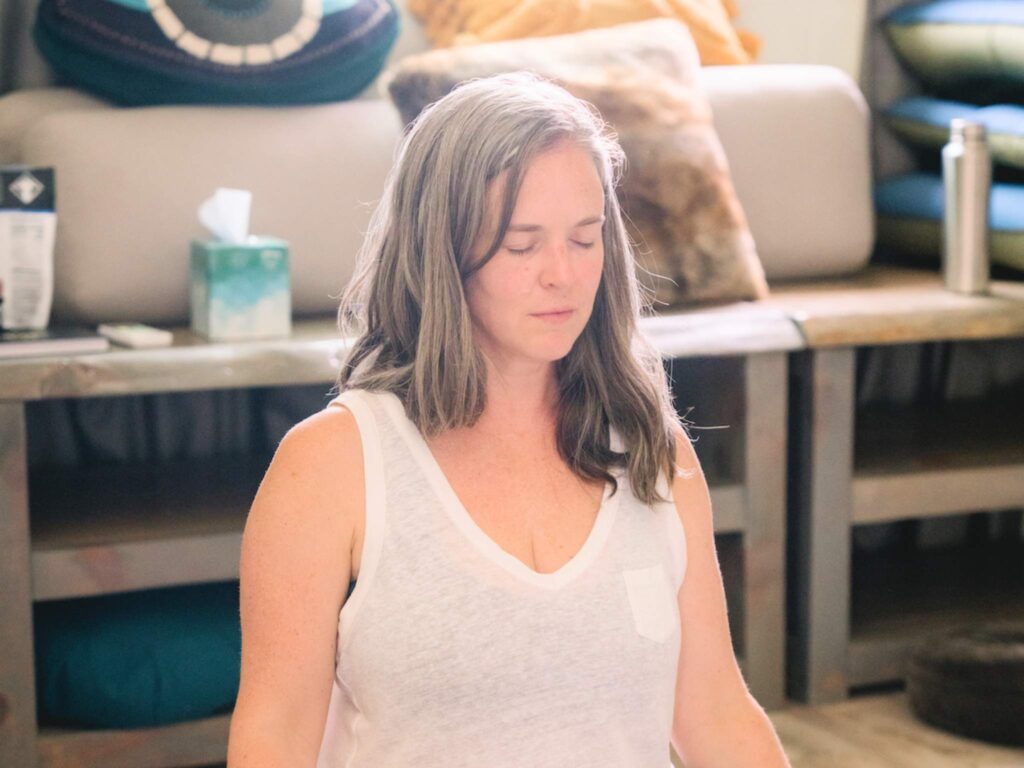
I’ve been practicing yoga for over two decades… nearly three! And, to be fully transparent, there was a time when stepping onto my yoga mat felt more like stepping onto a stage.
I’d roll it out right at the front of the room.
Wearing the right leggings.
Doing the hard variations.
Trying to look like the kind of yoga teacher who had it all together.
And if I’m honest, that performance mindset didn’t stop when class ended.
It followed me everywhere — in my work, in my relationships, in my role as a teacher, partner, leader, woman.
Performing. Proving. Perfecting. All day long. Everyday.
Until one day — without planning, without a dramatic decision — I quietly pulled my mat to the back of the room.
My intuition was speaking up and I was just quiet enough to hear it.
And as I settled onto my mat, I felt something in me soften… and listen.
That small move? Created a (much needed) shift in perspective.
The Shift From Performance to Presence
In yoga, we often hear the phrase “just show up on your mat.”
But what if how we show up matters just as much as that we show up?
That day in the back row, I stopped performing, stopped “perfecting”, and started practicing — truly, deeply, authentically.
I slowed down.
I breathed deeper.
I skipped poses.
I listened to my body instead of overriding it. In my previous life, I was a competitive dancer and I knew very well how to push through discomfort to get the perfect shape, but “just being” in a shape had been elusive.
That day, I let go of doing yoga right and started letting yoga the practice work on me.
And slowly, something sacred started to unfold:
- My nervous system began to relax
- The internal pressure eased
- My heart opened
- My mind grew quieter
- Tension melted
I had found my way back to the true heart of yoga — not just the poses, but the practice.
The 8 Limbs of Yoga: A Return to Yoga’s Foundation
What I was experiencing was what the ancient yogic texts have always taught — yoga isn’t just about stretching or strength. It’s a path toward inner stillness, self-awareness, and spiritual connection.
As outlined by Patanjali in the Yoga Sutras, the 8 Limbs of Yoga offer a complete guide to a more conscious life:
- Yamas (ethical principles)
- Niyamas (personal observances)
- Asana (physical postures)
- Pranayama (breath control)
- Pratyahara (withdrawal of senses)
- Dharana (concentration)
- Dhyana (meditation)
- Samadhi (bliss or union)
That moment — quietly taking my mat to the back of the room — was a practice in:
- Ahimsa: Non-harming. I stopped pushing past my limits.
- Svadhyaya: Self-study. I started to notice why I felt the need to prove myself.
- Dhyana: Meditation. I listened inwardly, rather than outwardly.
It was no longer about the posture.
It was about the presence inside the posture.
As restorative teacher Judith Hanson Lasater reminds us:
Yoga is not about touching your toes. It’s about what you learn on the way down.
Yoga as Nervous System Healing
In our fast-paced, productivity-obsessed world, we’re often praised for how much we can do — even in our wellness practices.
But true yoga invites us to be.
To listen.
To feel.
To pause.
To come home to ourselves.
As science now shows, mindful movement, deep breathing, and intentional rest — the foundations of many yoga practices — directly support nervous system regulation and help us shift from chronic fight-or-flight into states of rest, healing, and integration.
When we stop performing and start practicing, we don’t just change our yoga.
We change our lives.
How Do You Use Yoga for Nervous System Regulation?
You regulate your nervous system through yoga by slowing your breath, lengthening your exhale, and giving your body simple, repeatable signals of safety. You don’t need a 90-minute practice or a single advanced pose. Here are three I come back to — especially on the days I catch myself performing again:
- Longer exhales. Breathe in for a count of four, out for a count of six. A longer exhale tells your vagus nerve it’s safe to downshift out of fight-or-flight. Two minutes is enough to feel the change.
- Legs up the wall. Lie on your back with your legs resting up a wall for five to ten minutes. Place one hand on your heart and one hand on your belly. It’s one of the most reliable ways to drop into rest-and-digest — no effort, no shape to get right. Bonus points if you add your longer exhales.
- One pose, fully felt. Pick a single shape — child’s pose, a slow forward fold, a supported heart opener — and stay long enough to stop doing it and start feeling it. That shift from overriding your body to listening to it is the whole practice.
None of this is about discipline. It’s about practice. It’s about repetition. Your nervous system learns safety the same way it learned stress — a little at a time. And on the other side of that softening is the part most of us forgot we were missing: feeling awake in your own life again, laughing more easily, actually here.
An Invitation: Step Back to Move Forward
If you’ve been feeling the pressure to keep up, to push harder, or to perform — both on your mat and in your life — I see you.
And I invite you to try something different.
Pull your mat to the back of the room.
Close your eyes.
Breathe.
Ask yourself, gently:
What would it feel like to honor myself — not just in this practice, but in my whole life?
Let your yoga be a place where you return to yourself — not prove yourself.
Curious where this practice goes deeper? Our next Yoga Teacher Training opens soon — less about certification, more about transformation from the inside out. Join the waitlist → and you’ll be the first to hear.
The Questions I Hear Most About Yoga & the Nervous System
Can yoga really help regulate your nervous system? Yes, absolutely. Yoga supports nervous system regulation by activating the parasympathetic (rest-and-digest) state through slow movement, longer exhales, and mindful attention. Research links regular practice to improved heart rate variability and lower stress. When taught skillfully, even a strong vinyasa class can help regulate your nervous system (we’ll dig into this in another post).
What is yoga for nervous system regulation? Yoga for nervous system regulation is the use of breath, gentle movement, awareness, and stillness to shift your body out of chronic fight-or-flight and into a calmer, more balanced state. It’s less about flexibility and more about teaching your body what safety feels like again.
Do you need to be experienced at yoga for this to work? No. You do not need any yoga experience to use yoga for nervous system regulation. The most effective practices — slow breathing, legs up the wall, resting in a single pose — require no skill, no flexibility, and no prior practice.
How long does it take to feel calmer? Often just a few minutes. A two-minute breathing practice with a longer exhale can shift your state in one sitting. Lasting regulation, though, comes from small, repeated practice over time — not a single session.
What are the best yoga poses for stress and burnout? Restorative, low-effort shapes work best for stress and burnout: legs up the wall, child’s pose, supported reclined positions, and slow forward folds. The goal isn’t intensity — it’s giving an overworked nervous system permission to rest.
Is this the same as a regular yoga class? Not always. Many fast-paced or performance-focused classes keep the body activated. Nervous system regulation prioritizes slowness, breath, and rest — which is why a gentle or restorative practice is often more effective when you’re depleted.
Can yoga help with perimenopause and sleep? Yes, indirectly. By calming the nervous system, yoga can ease the stress response that worsens sleep, mood, and tension — symptoms many women notice intensify during perimenopause. It’s a supportive practice, not a medical treatment.
How does this connect to a yoga retreat? A retreat gives your nervous system days, not minutes, to downshift — which is when deeper regulation actually happens. Stepping away from constant demands, sleeping well, and moving slowly is often what lets the body finally come out of survival mode.
The Practice Continues…
This shift in my own practice laid the groundwork for how I now teach, lead retreats, and create sacred space for others. It’s why so many women join us on our retreats feeling burned out, disconnected, or stuck — and leave feeling grounded, radiant, and clear.
If your nervous system needs more than a few minutes — if it needs a few days — that’s what our retreats are for. A space to slow down, sleep deeply, and remember what it feels like to be in your own life again.
And if you’ve ever felt your intuition whisper — maybe I want to go deeper… maybe even become a teacher someday… we’ll be sharing details soon about our upcoming Yoga Teacher Training. This path isn’t just about certification. It’s about transformation from the inside out.
Stay close. Keep listening.
Your mat — your practice — your path is waiting.
With love,
Autumn
About the Author
Autumn Adams
E-RYT, YACEP, Founder of Ambuja Yoga
Autumn is a yoga teacher, retreat leader, and the founder of Ambuja Yoga. She is passionate about helping women reconnect with their inner wisdom through yoga, movement, and mindful living.
You Might Also Enjoy
Box Breathing: A Simple Practice to Calm Your Nervous System in Minutes
Welcome to the Mindful Monday Series. Box breathing is a simple breathing technique — inhale,…
Herbs for Yoga Practice: 5 Simple Ways to Deepen Calm & Connection
Bringing Ritual Back to the Practice If you’ve been wondering how to use herbs in…
Yoga Nidra Script Inspired by Nature (Free PDF + Audio)
Discover the many benefits of yoga nidra, yogic sleep, with this yoga nidra script inspired…