Herbs for Yoga Practice: 5 Simple Ways to Deepen Calm & Connection
 Lisa LeCuyer
13 years · 40+ retreats · 700+ women



Bringing Ritual Back to the Practice
If you’ve been wondering how to use herbs in your yoga practice, you’re not alone.
Most yoga practices focus on what happens on the mat — the poses, the breath, the sequence.
But over time, many of us begin to feel that something is missing, not in the practice itself, but in the space around it.
The deeper shift often happens outside the poses.
It happens in how you arrive. How you soften. How you create a sense of safety in your body.
This is where herbs for yoga practice come in — not as something to “add on”, but as a way to return yoga to its roots as a lived, embodied ritual.
Working with plants invites slowness. It invites presence. It gently supports the nervous system in ways that make the practice feel less like something you do, and more like something you enter.
Below are five simple, accessible ways to begin weaving herbs into your yoga practice.
A Personal Note on Working with Herbs
My path into herbalism didn’t come from a straight line — it came from searching.
After my time in the U.S. Marine Corps, I experienced health challenges connected to toxin exposure, including reproductive struggles that left me looking for answers that didn’t fully exist within conventional care.
That search led me to the plants.
What began as curiosity became a deep relationship with herbal medicine and a completely different way of understanding the body.
So when I share ways to work with herbs in a yoga practice, it’s not just theoretical.
It’s grounded in lived experience — what I’ve seen, what I’ve practiced, and what I continue to return to.
How Can You Use Herbs in a Yoga Practice?
You can use herbs in a yoga practice by drinking herbal tea before or after, using aromatics during meditation, creating simple rituals, and working with herbs to support relaxation and focus.
Why Use Herbs in a Yoga Practice?
Working with plants invites something most of us are missing:
- slowness
- presence
- a sense of relationship
Herbs gently support the nervous system by helping your practice feel less like something you do and more like something you enter.
A Note on Safety
Herbs are powerful, and not every herb is right for every body. If you are pregnant, nursing, taking medication, or managing a health condition, check with a qualified herbalist or your healthcare provider before working with the plants below. Mugwort in particular is traditionally avoided during pregnancy. When in doubt, start gently and go slow — that’s part of the practice too.
1. Start Your Practice with Herbal Tea
One of the most grounding ways to begin is by creating a small pause before you step onto the mat.
Brewing a cup of tea in this way helps signal safety to the body before movement begins.
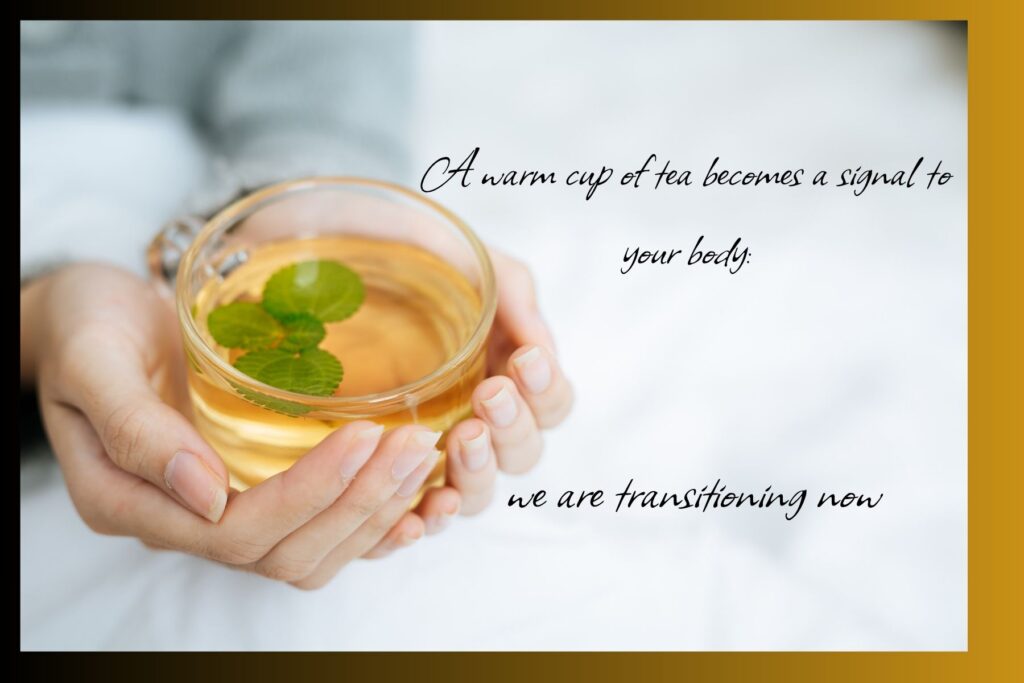
In my own practice, herbal tea was one of the first ways I began reconnecting with my body — simple, but surprisingly powerful.
Some supportive herbs:
Skullcap (Scutellaria lateriflora) – deeply calming for an overactive nervous system
“Skullcap excels at relieving acute and intense situations of stress and anxiety. It’s calming and soothing to the nervous system and its effects can be felt immediately. …It can be taken long term to broadly support the nervous system and help to reduce the negative effects of chronic stress. As a nerve tonic, it can help people who have been through prolonged periods of stress and feel like their nerves are constantly on edge.” Rosalee de la Forêt:Skullcap Uses and Plant Monograph
Gotu Kola (Centella asiatica) – a gently cooling, clarifying herb that supports clarity, steady awareness and a focused meditative state
Traditionally valued in many herbal systems, it’s often used to help ease brain fog and scattered attention, offering a sense of calm alertness that pairs beautifully with breathwork and stillness. In a more holistic sense, it’s also known for supporting connective tissue and overall resilience in the body, making it a quiet but powerful ally for practices that invite both presence and integration.
Lavender (Lavandula angustifolia) – a gentle, aromatic ally that softens tension and invites relaxation
Known for its ability to calm the nervous system, it can be especially supportive during times of emotional overwhelm, restlessness, or mental fatigue. Whether sipped as a tea or experienced through scent, lavender encourages relaxation, supports more restful sleep, and helps create a sense of spaciousness.
Sit with your tea for a few moments before your yoga practice. Feel the warmth in your hands. Notice your breath slowing.
In this way, this simple act helps shift your body out of “doing mode” and into a more receptive, parasympathetic state.
This is where the practice begins.
2. Use Aromatics During Meditation or Savasana
Scent is one of the fastest ways to influence the nervous system.
Using herbs during savasana or meditation helps your body associate scent with rest and safety.
Over time, I’ve seen how certain plants consistently support a deeper sense of stillness — both in my own practice and in the people I work with.
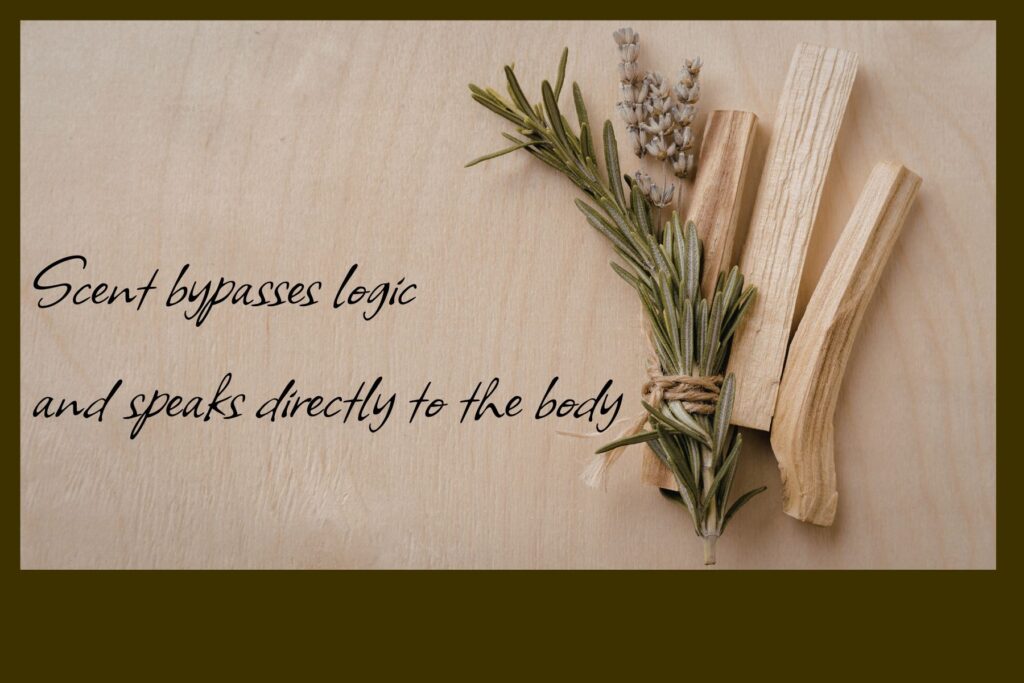
A few beautiful options:
Lavender (oil, spray, or dried)
Lavender is calming, heart opening and widely accessible
Mugwort (burned gently as incense)
Mugwort supports introspection and inner awareness. Its botanical name, Artemisia vulgaris, is linked to Artemis, the moon-associated goddess of instinct and wild knowing.
In practice, Mugwort is thought to gently open the doorway to deeper awareness, inviting insight from the subconscious and illuminating what has long been tucked away.
In this way, it can support reflection, helping you process past experiences with greater clarity, softness, and a sense of integration.
Take a deeper dive into Mugwort through Evolutionary Herbalism’s Herb of Dreams: https://www.evolutionaryherbalism.com
Palo Santo (oil, spray or burned gently)
Palo Santo is grounding and space-clearing. It is often translated as “sacred” or “holy wood” and it has long been used in ritual for its grounding and clearing qualities.
When burned mindfully, its warm, resinous aroma can help shift the energy of a space, inviting a sense of calm, presence, and subtle connection… to breath, to body, to something ancestral or deeply rooted.
It’s often worked with to release stagnant or heavy energy, creating a more centered environment that supports meditation, reflection, and nervous system ease.
You don’t need much—just a subtle presence in the space.
Let the scent become an anchor. Something your body begins to associate with rest, safety, and stillness.
3. Create a Simple Yoga Ritual with Herbs
This is where your practice becomes personal.
It can be as simple as:
- lighting a small bundle of herbs
- setting an intention
- placing your hands on your heart before you begin
- or sitting quietly for a few minutes after your practice ends
Herbs like Mugwort or Palo Santo can be used here to mark the beginning or closing of your practice space.
This is something I return to often — especially when I feel disconnected or overwhelmed.
Over time, these small rituals create a felt sense of: “this is where I return to myself.”
They help your practice extend beyond movement – and into something more personal, intuitive, and grounding.
4. Work with Herbs to Deepen Meditation
Some herbs have a long history of supporting meditative awareness, subtle perception, and inner stillness.
Two espeically supportive allies:
- Gotu Kola – clarity + sustained attention
- Mugwort – intuition + inner imagery
You can:
- drink them as tea
- place them nearby
- simply hold them and breathe, letting the scent anchor your attention
Rather than expecting a dramatic shift, think of these herbs as gentle companions.
This is one of the simplest ways to explore herbs for yoga practice without overcomplicating your routine.
They don’t force the experience.
They support your ability to stay with it.
5. Burning or Smoking Herbs (Optional & Intentional)
In some traditions, herbs are burned or smoked ceremonially as a way to connect breath, body, and plant medicine.
For those who feel called to this practice, herbs like:
- Skullcap – mild and calming
- Mugwort – introspective and dreamlike
may be used in small, mindful ways. (If you are pregnant, nursing, or have a respiratory condition, skip smoking herbs entirely — see the safety note above.)
It’s important to approach this with intention, awareness, and respect for your body. This path isn’t necessary for everyone—and there are many equally powerful ways to work with plants.
Burning herbs as incense can offer a similar experience without inhalation.
What I’ve Seen Working with Herbs
One of the things I’ve noticed, both in my own life and in working with others, is that it’s rarely the complex practices that create the biggest shifts.
It’s the simple, consistent ones.
Sitting with a cup of tea. Pausing before practice. Creating small moments of intentional stillness.
These are the things that begin to regulate the nervous system.
That create a sense of safety in the body.
And over time, that’s what allows a practice to deepen — not through effort, but through relationship.
This is the heart of what we explore at the Herbalism & Yoga Retreat in Oregon — yoga, plant medicine, and nature woven into one experience. Explore the retreat
What This Changes in Your Practice
You don’t deepen your yoga practice by doing more poses.
You deepen it by changing your relationship to your body.
By creating safety. By inviting slowness. By allowing space for awareness to unfold naturally.
Herbs support this gently by helping shift the body out of chronic stress and into a state where presence becomes more accessible.
Over time, your practice begins to feel less like something structure… and more like something you inhabit.
What You May Start to Notice
When you begin weaving herbs into your yoga practice, something subtle begins to shift.
You may notice:
- your breath deepening more naturally
- your body softening more quickly
- your mind settling without force
And perhaps most importantly — a sense of relationship.
To the plants. To the practice. To yourself.
If you’d like to explore more, you can read my guide on calming herbs for anxiety and stress relief here.
FAQ: Herbs for Yoga Practice
What are the best herbs for yoga practice?
Lavender, skullcap, and gotu kola are commonly used to support relaxation, nervous system regulation, and focus.
Can herbs help with meditation?
Yes. Herbs like mugwort and gotu kola can support deeper awareness, clarity, and relaxation.
Do I need experience with herbs?
No. You can begin with simple practices like herbal tea or aromatics.
Are herbs safe to use during pregnancy or while breastfeeding?
Not always. Several calming herbs, mugwort in particular, are traditionally avoided during pregnancy. If you are pregnant, nursing, taking medication, or managing a health condition, check with a qualified herbalist or your healthcare provider before beginning.
What herbs are best for relaxation and sleep?
Lavender and skullcap are gentle, widely used choices for calming an overactive nervous system and easing into rest.
How do I make herbal tea for yoga or meditation?
Steep about one teaspoon of dried herb (or one tea bag) in hot water for five to ten minutes, then sit with it before or after your practice. The pause matters as much as the tea.
Can I burn herbs indoors safely?
Yes, in a well-ventilated space and in a fireproof dish. If you’d rather not inhale smoke, burning herbs as incense or using aromatics offers a similar effect without inhalation.
A Gentle Invitation
If this way of practicing speaks to you —
There’s a space where this comes to life in a deeper, more embodied way.
A place where yoga, herbalism, and nature are woven together — not as separate practices, but as one experience.
Not just the poses. But the spaces in between them.
About the Author
Lisa LeCuyer
Master Herbalist & Certified Health & Wellness Coach
Lisa LeCuyer is a Master Herbalist and Certified Mindful Health & Wellness Coach who helps women reconnect with the wisdom of plants and the deep intelligence of their own bodies. Her work blends herbalism, mindfulness, and intentional self-care into accessible practices for modern life—rooted in integrity, service, and soul.
You Might Also Enjoy
Box Breathing: A Simple Practice to Calm Your Nervous System in Minutes
Welcome to the Mindful Monday Series. Box breathing is a simple breathing technique — inhale,…
Why I Moved My Yoga Mat to the Back of the Room (And What I Found There)
I’ve been practicing yoga for over two decades… nearly three! And, to be fully transparent,…
Yoga Nidra Script Inspired by Nature (Free PDF + Audio)
Discover the many benefits of yoga nidra, yogic sleep, with this yoga nidra script inspired…